German cockroaches — the small tan ones that infest kitchens — are the species most US homeowners actually battle. They breed in 6 weeks. A single egg case (ootheca) hatches 30+ nymphs. And they've evolved resistance to most over-the-counter pesticides.
If you've sprayed, set out gel bait, and even bombed the place, but the roaches just won't leave for good, here's what's missing from your strategy.
Roaches don't live where you see them
Roaches you see on the counter at night represent maybe 5% of your population. The other 95% are hidden behind the refrigerator, under the dishwasher, inside the wall void behind the sink, behind the microwave, and inside the gap above your kitchen cabinets.
Spray-can pesticides only kill what they directly contact. They don't penetrate to the breeding sites, which is why you keep seeing more.
Bait works — but slowly
Roach bait gel (the stuff that comes in a syringe) is the most effective conventional treatment because the toxin is brought back to the nest by foraging workers. The catch: it takes 2–4 weeks to kill enough of a colony to see daytime improvement, and you need to apply it in 30–50 small dots in tucked-away locations. Most homeowners give up before it works.
What we recommend (no chemicals)
Combine three layers:
- Sanitation: roaches need water more than food. Fix every dripping faucet. Don't leave wet dishes overnight. Wipe down sinks before bed.
- Sealing: caulk every gap around plumbing, behind cabinets, and at baseboard joints. Use a flashlight to find them.
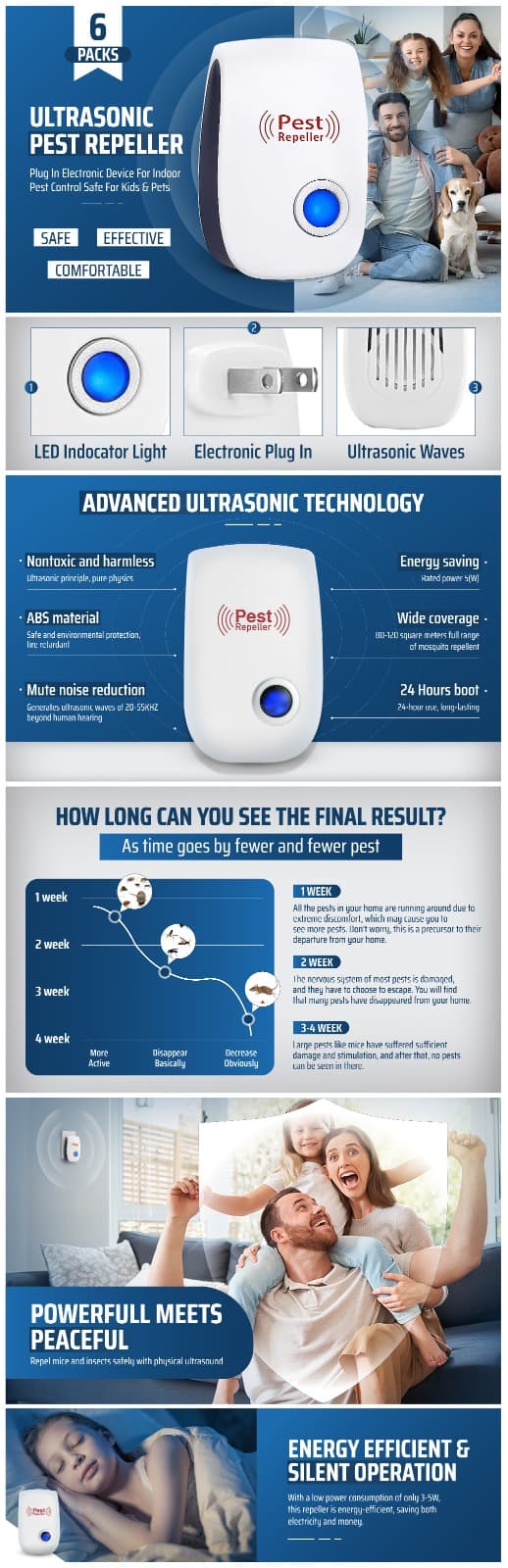
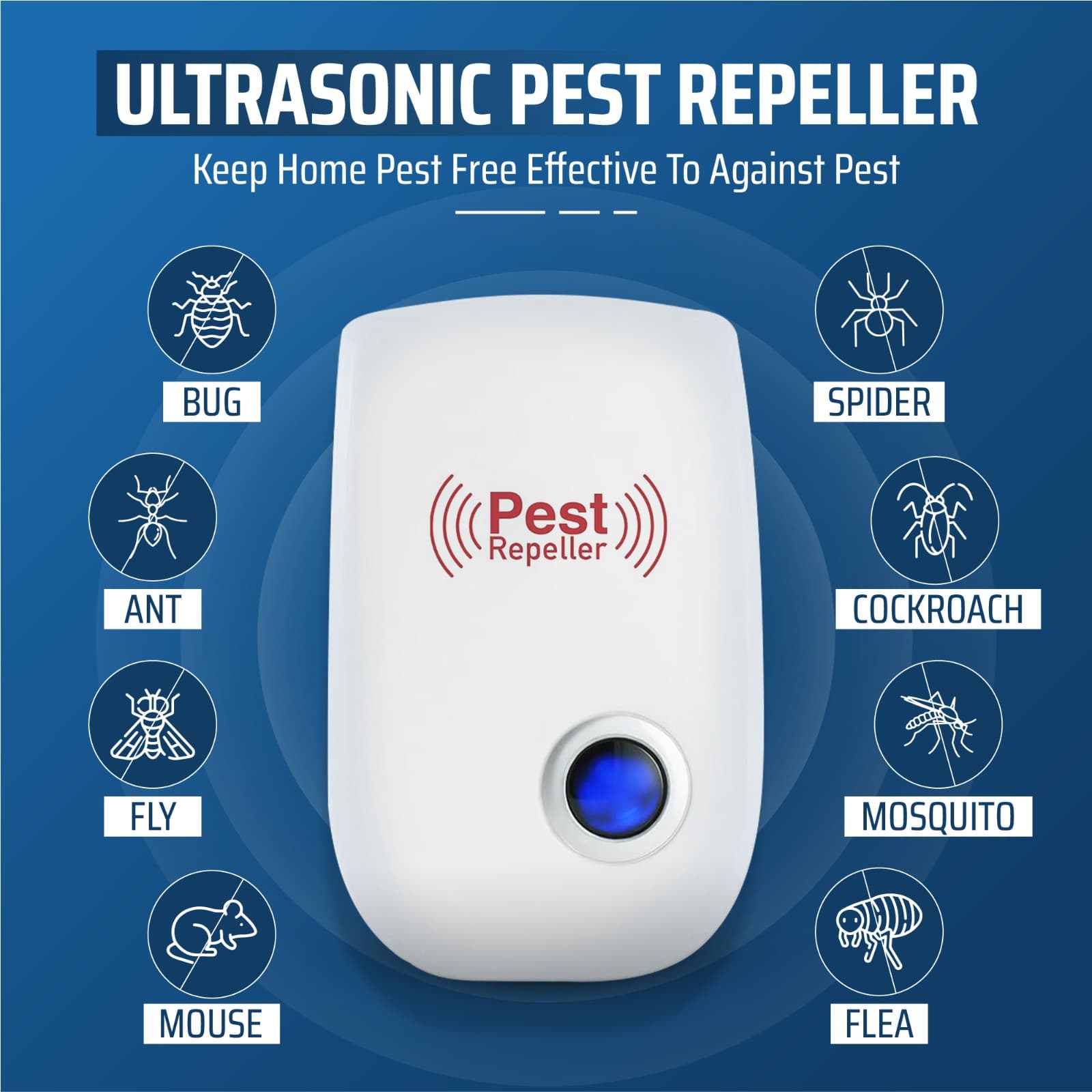
- Ultrasonic deterrent: a plug-in repeller in the kitchen and bathroom makes those rooms hostile environments. Cockroaches respond to ultrasonic frequencies in the 30–55 kHz range and over time relocate elsewhere — ideally, out of your home.
Why ultrasonic helps with roaches specifically
Cockroaches rely heavily on cerci — sensory hairs on their abdomen — to detect air and vibration cues. Continuous ultrasonic stimulation interferes with their ability to navigate confidently in the space, suppressing foraging activity and pushing the colony toward less-stressful environments. It's not instant, but it's persistent — and it doesn't lose effectiveness over time the way chemical pesticides do.
Plug units in the kitchen (one per outlet near the sink and behind appliances) and in any bathroom with plumbing access. Most customers see significant population drop in 2–3 weeks.